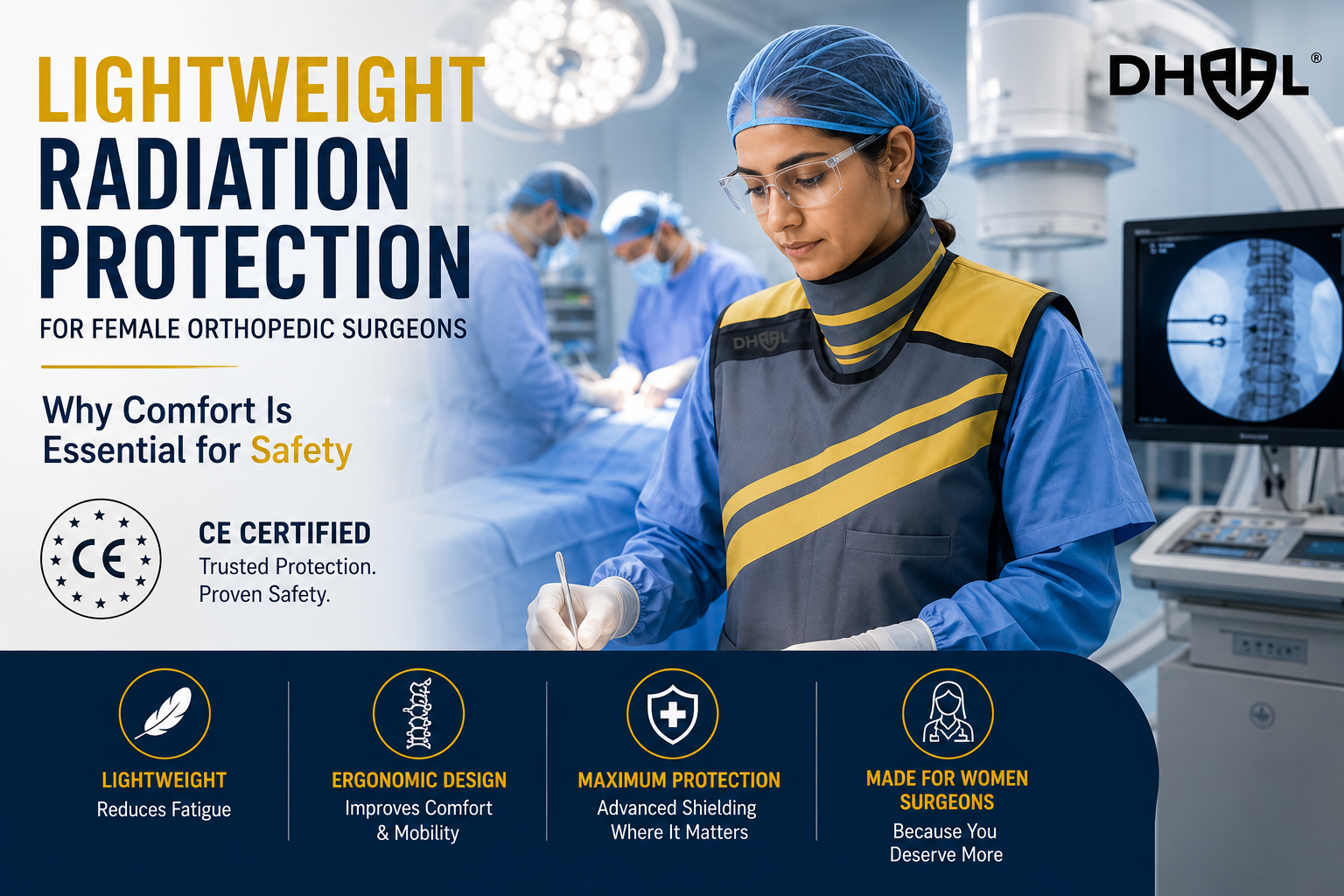
Orthopedic surgery has evolved rapidly with the increased use of fluoroscopy, C-arms, and image-guided procedures. While these technologies improve surgical precision, they also expose surgeons to ionizing radiation on a routine basis. Among those at particular risk are female orthopedic surgeons, who often spend long hours wearing heavy radiation protection apparel while performing complex procedures.
Recent research has also raised concerns about occupational radiation exposure and its potential association with an increased risk of breast cancer among female orthopedic surgeons. Although protective equipment significantly reduces radiation exposure, the effectiveness of that protection depends on whether it is worn correctly and consistently throughout the procedure.
This is where lightweight radiation protection becomes more than a comfort feature—it becomes an essential part of workplace safety.
The Growing Need for Radiation Protection in Orthopedic Surgery
Fluoroscopy has become a standard tool in orthopedic procedures such as:
- Trauma fixation
- Spine surgery
- Joint replacement
- Fracture reduction
- Pain management procedures
Every use of fluoroscopy generates scatter radiation, which can expose surgeons standing near the imaging equipment. Over years of practice, these repeated low-dose exposures accumulate, making radiation safety a critical aspect of occupational health.
Female orthopedic surgeons may have additional considerations because sensitive tissues, including the breast and thyroid, require effective shielding during repeated exposure.
The Problem with Traditional Heavy Lead Aprons
For decades, conventional lead aprons have been the standard form of radiation protection. While they offer reliable shielding, they also present several challenges:
- Significant weight on the shoulders and neck
- Fatigue during lengthy surgeries
- Increased risk of neck and back pain
- Reduced mobility in the operating room
- Greater physical strain during multiple procedures in a day
Orthopedic surgeons often perform surgeries that last several hours. Wearing a lead apron orthopedic throughout these procedures can contribute to musculoskeletal discomfort and long-term occupational injuries.
Why Lightweight Radiation Protection Makes a Difference
Modern radiation protection apparel is designed to provide the required attenuation while significantly reducing overall weight.
Benefits include:
Reduced Physical Fatigue
A lighter apron decreases the load on the shoulders and spine, allowing surgeons to remain comfortable during long procedures.
Improved Mobility
Greater flexibility helps surgeons move naturally without feeling restricted, improving efficiency in the operating room.
Better Weight Distribution
Ergonomic designs transfer weight from the shoulders to the hips, reducing pressure on the cervical spine.
Increased Compliance
When protective apparel is more comfortable, healthcare professionals are more likely to wear it correctly throughout every procedure.
Important Features Female Orthopedic Surgeons Should Look For
Not all radiation protection apparel is designed with the same priorities. Female surgeons should consider:
Ergonomic Fit
A well-fitted apron minimizes gaps in protection while improving comfort and freedom of movement.
Lightweight Protective Materials
Modern lead-free and composite shielding materials can reduce weight while meeting applicable radiation attenuation standards.
Full Wrap Protection
Wrap-around designs provide enhanced protection from scatter radiation originating from multiple directions.
Secure Closure Systems
Reliable closure mechanisms help maintain proper positioning during movement throughout the procedure.
Balanced Weight Distribution
Designs incorporating supportive belts or weight-distribution systems reduce shoulder strain.
Thyroid Protection
Since the thyroid is highly sensitive to radiation, a properly fitted thyroid collar should always be used alongside the apron.
Important Features Female Orthopedic Surgeons Should Look For
Not all radiation protection apparel is designed with the same priorities. Female surgeons should consider:
Ergonomic Fit
A well-fitted apron minimizes gaps in protection while improving comfort and freedom of movement.
Lightweight Protective Materials
Modern lead-free and composite shielding materials can reduce weight while meeting applicable radiation attenuation standards.
Full Wrap Protection
Wrap-around designs provide enhanced protection from scatter radiation originating from multiple directions.
Secure Closure Systems
Reliable closure mechanisms help maintain proper positioning during movement throughout the procedure.
Balanced Weight Distribution
Designs incorporating supportive belts or weight-distribution systems reduce shoulder strain.
Thyroid Protection
Since the thyroid is highly sensitive to radiation, a properly fitted thyroid collar should always be used alongside the apron.
Supporting Women in Orthopedic Surgery
As more women enter orthopedic surgery, hospitals and healthcare institutions should ensure that radiation protection solutions address both safety and ergonomics. Protective apparel that fits properly, reduces fatigue, and encourages consistent use contributes to a healthier working environment.
Providing lightweight, ergonomically designed radiation protection is not simply about comfort—it supports surgeon well-being, helps reduce physical strain, and promotes long-term occupational safety.
Conclusion
Female orthopedic surgeons dedicate their careers to restoring mobility and improving patients’ lives. They deserve radiation protection that supports their own health in return.
Lightweight radiation protection apparel helps reduce fatigue, improves mobility, and encourages consistent use without compromising on safety. When combined with good radiation safety practices and properly fitted protective equipment, it becomes an important investment in both surgeon health and patient care.
As awareness of occupational radiation exposure continues to grow, choosing comfortable, ergonomic, and high-quality radiation protection should be viewed as an essential part of every orthopedic operating room.