Lead radiation protection apparel—such as aprons, thyroid shields, and lead gloves—is essential for the safety of healthcare professionals and technicians working in radiology, nuclear medicine, or any environment with ionizing radiation. These garments serve as a critical barrier between harmful radiation and the human body. However, with regular use, lead apparel can develop cracks, creases, and holes, reduce its effectiveness and putting users at risk.
To extend the life of your radiation protection gear and ensure it performs as intended, it’s important to follow proper care, storage, and inspection practices. Here’s how you can protect your lead-lined garments from damage and maintain their shielding integrity.
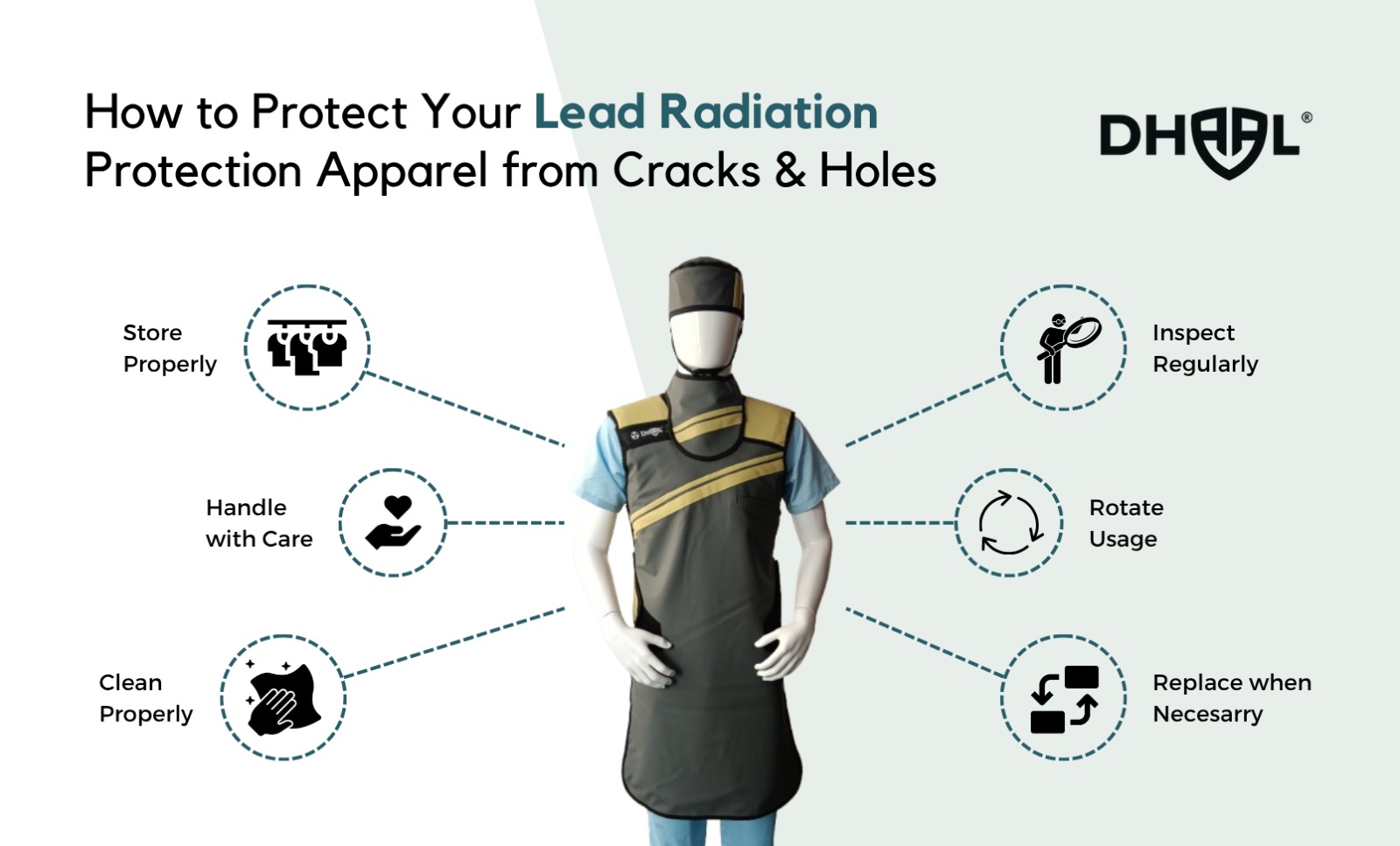
1. Store Apparel Properly
Improper storage is one of the most common causes of cracks and holes in lead garments. Avoid folding or creasing the material, as this can cause the lead core to break down over time.
Tips:
- Always hang lead aprons and garments on a heavy-duty hanger designed for radiation protection apparel.
- Avoid placing them on sharp hooks, nails, or rails that could puncture or stress the material.
- Store them in a cool, dry, and flat position, away from direct sunlight and heat sources.
2. Handle With Care
When putting on or removing radiation protection apparel, handle it gently. Pulling, dragging, or throwing the garments can stress the seams and inner lead lining.
Tips:
- Don’t drop or toss aprons on hard surfaces.
- Use two hands when lifting or adjusting to prevent tugging on one side.
- Avoid sitting on, kneeling on, or compressing the garment in any way.
3. Clean Correctly
Cleaning with harsh chemicals or improper methods can weaken the fabric and potentially damage the protective core.
Tips:
- Use a mild soap or lead apron-specific cleaner and a damp cloth.
- Never submerge the apron in water or machine-wash it.
- Allow it to air-dry completely before storing to prevent mold or mildew.
4. Inspect Regularly
Routine inspections can identify early signs of wear and tear, helping you take action before the damage becomes severe.
Tips:
- Visually inspect the outer surface for tears, holes, or abnormal creases.
- Palpate for lumps or cracks inside the lining.
- Perform a fluoroscopic inspection annually to detect internal damage invisible to the naked eye.
- Mark the inspection date and findings for compliance and tracking.
5. Rotate Usage
If your department uses multiple lead garments, rotate them regularly. Overusing a single item can lead to quicker degradation.
Tips:
- Maintain an inventory log and assign gear for rotational use.
- Train all staff on proper care to avoid uneven wear patterns.
6. Replace When Necessary
No matter how well you maintain your lead apparel, it won’t last forever. Most garments have a life expectancy of 3 to 5 years, depending on usage.
Tip:
- If an inspection reveals holes, thinning, or structural damage, retire and replace the garment immediately.
Conclusion
Protecting your lead radiation apparel from cracks and holes isn’t just about saving money—it’s about ensuring safety and compliance. With the right handling, storage, and maintenance practices, you can extend the life of your garments and continue to shield yourself and your team effectively from radiation exposure.